Tracing Cross-Border Data Flows in Real-Time Roulette Decision Models Across Unregulated Markets
Xander Schmitt · Jun 21, 2026
Tracing Cross-Border Data Flows in Real-Time Roulette Decision Models Across Unregulated Markets
Real-time roulette decision models rely on continuous streams of player data, spin outcomes, and betting patterns that move across international boundaries in milliseconds, and observers note these flows often pass through servers located in jurisdictions with minimal oversight. Researchers tracking these movements have documented how betting platforms collect inputs from user devices in one country while processing algorithms on infrastructure hosted elsewhere, creating layered transmission routes that complicate monitoring efforts.
Data Pathways in Roulette Algorithms
Decision models for online roulette process historical spin sequences alongside live inputs such as wager amounts and timing, then generate recommendations or adjustments through machine learning layers that update after each round. These calculations depend on low-latency connections that route information through multiple network nodes, and data packets frequently originate from player locations in heavily regulated regions yet terminate at processing centers in areas lacking specific online gaming statutes. Studies of network traffic patterns reveal that such routing often involves encryption protocols designed to obscure origin points while maintaining the sub-second response times required for seamless gameplay.
Transmission occurs via APIs that exchange structured data on bet parameters and result verification, whereas unregulated markets allow operators to bypass standard logging requirements that exist in licensed environments. This setup means individual player sessions can generate data trails spanning several continents within a single evening, and analysts examining packet headers have identified repeated hops through transit countries that do not enforce data retention rules for gambling-related activity.
Technical Mechanisms Behind Real-Time Processing
Core components include random number generators synchronized with live dealer feeds or virtual wheel simulations, combined with user behavior analytics that adjust model outputs dynamically. Cross-border elements enter when these components reside on distributed cloud instances, allowing an operator based in one region to serve players globally while storing transaction logs on separate servers. Evidence from infrastructure mapping projects shows that latency optimization often prioritizes pathways through under-regulated network hubs, which reduces operational costs but fragments the visibility of complete data journeys.
June 2026 saw increased scrutiny from several national cybersecurity agencies examining similar data routing practices in digital entertainment sectors, with reports highlighting how roulette platforms exploit variable IP masking techniques to maintain service continuity. Those examining packet flows have observed that unregulated operators frequently switch hosting providers mid-session, further dispersing the trail of decision model inputs and outputs across borders.
Challenges in Monitoring Unregulated Environments
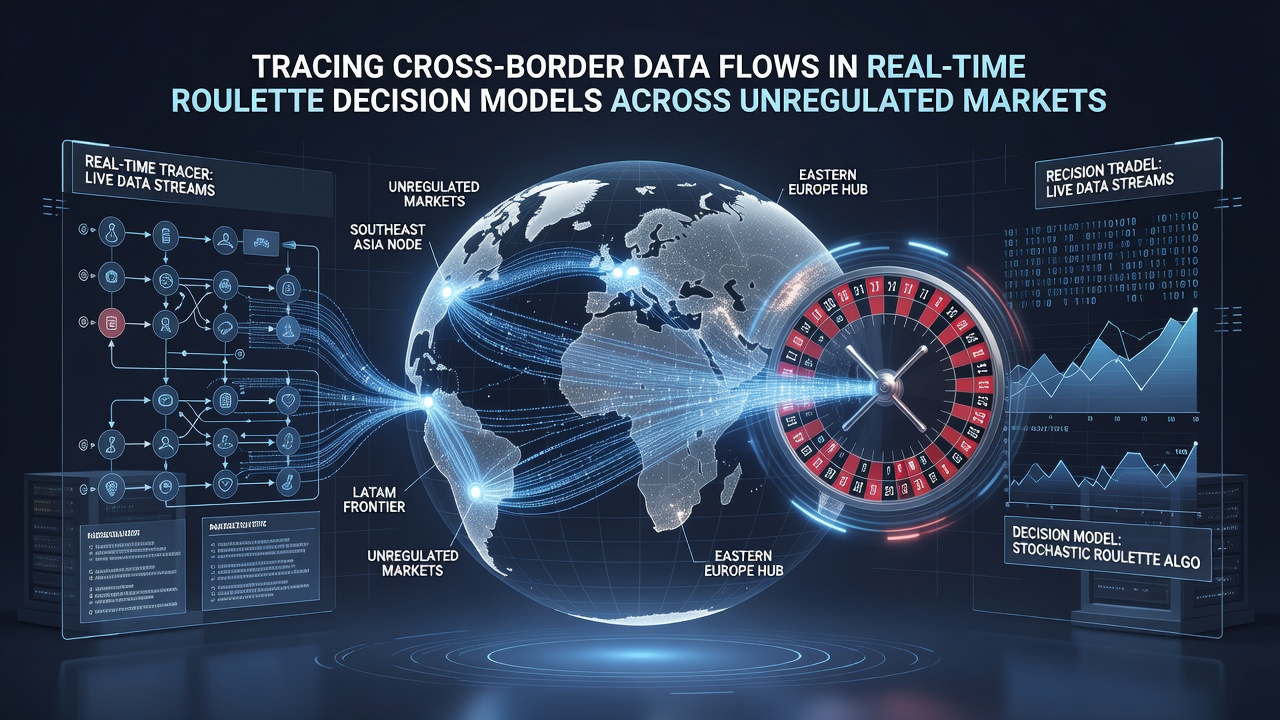
Tracing efforts encounter obstacles when platforms operate without mandatory data localization or audit trails, allowing decision model updates to occur on infrastructure that shifts locations based on commercial or evasive priorities. Regulatory bodies in Canada and Australia have published findings on related digital service flows, noting that the absence of standardized reporting formats hinders reconstruction of complete transmission sequences. One study from the Canadian Centre for Gaming Research documented how roulette models in offshore setups aggregate player data from multiple jurisdictions before feeding it into centralized analytics engines.
Network forensics tools can capture segments of these flows, yet gaps appear when operators employ decentralized storage or peer-assisted delivery methods that bypass traditional gateways. Researchers at institutions examining global data governance have pointed out that unregulated markets accelerate the adoption of privacy-focused routing technologies, which in turn reduces the granularity available for post-event analysis of betting decision sequences.
Implications for Data Governance Across Regions
Cross-border data movements in this domain intersect with broader discussions on digital sovereignty, where countries attempt to assert control over information generated within their borders even when processing occurs externally. Reports from the Australian Communications and Media Authority have addressed parallel issues in digital betting infrastructure, emphasizing the difficulties of enforcing retention policies when servers operate beyond direct jurisdictional reach. Observers tracking roulette platform activity note that decision models trained on aggregated international datasets often exhibit performance variations tied to the diversity of incoming traffic sources.
Technical standards for data exchange continue evolving, yet adoption remains uneven in environments without licensing mandates. This variation leads to inconsistent application of logging practices, and analysts have recorded instances where critical model parameters transfer through intermediary relays that strip identifying metadata before final delivery.
Conclusion
Cross-border data flows supporting real-time roulette decision models present ongoing technical and jurisdictional complexities in unregulated markets, with transmission routes shaped by both performance requirements and regulatory gaps. Continued examination by research organizations and government agencies across multiple continents provides incremental insights into these patterns, while the underlying infrastructure adapts to maintain operational continuity.