Regional Regulations Directing Payment Preferences in Mobile Live Action Platforms
Jakob Butler · Jul 22, 2026

Regional Regulations Directing Payment Preferences in Mobile Live Action Platforms
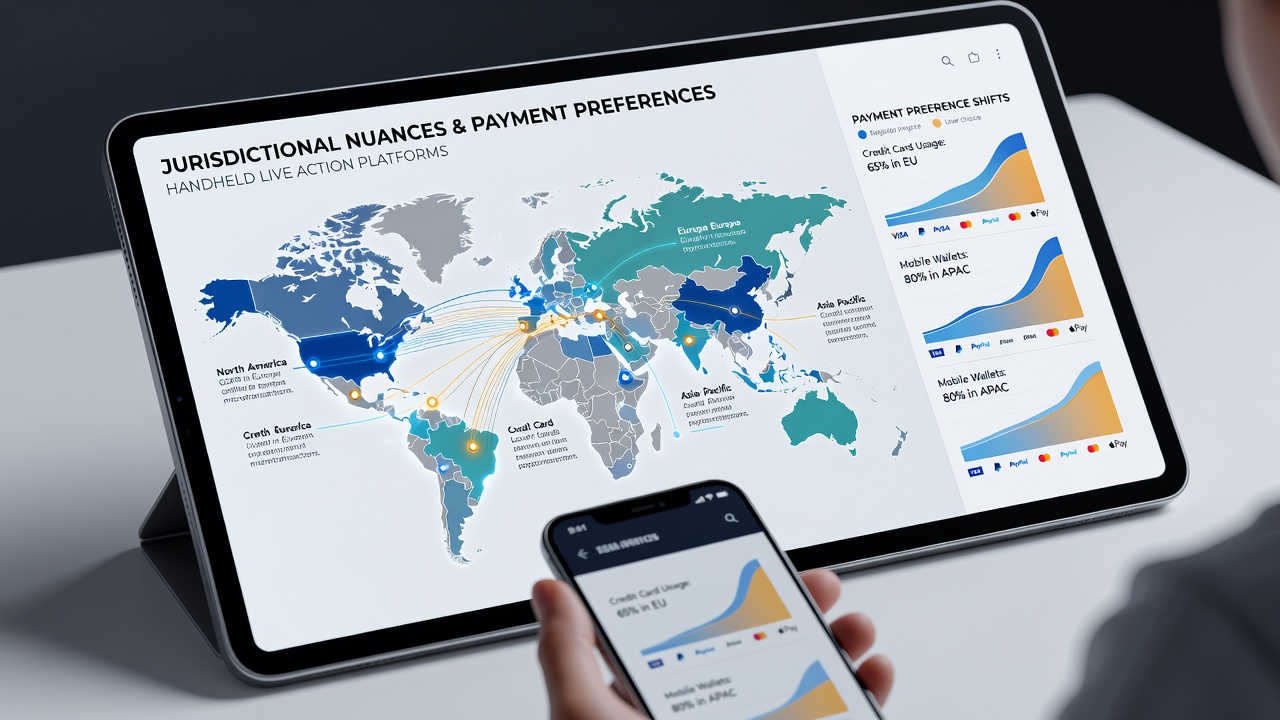
Regulatory frameworks across different jurisdictions continue to shape how users select and complete transactions in handheld live action gaming environments, and observers note that these variations create distinct patterns in payment method adoption. Data from industry reports show that mobile platforms offering live dealer experiences must adapt their systems to comply with local rules on financial transfers, which in turn influences user behavior and platform design choices.
North American Regulatory Variations
State level rules in the United States produce noticeable differences in accepted payment types for live table games accessed through mobile devices, while Canadian provincial frameworks add another layer of complexity. Research indicates that certain jurisdictions prohibit credit card deposits for gambling activities, which leads operators to emphasize e-wallet solutions and bank transfers instead. Figures from regulatory filings reveal that users in states with strict deposit limits often migrate toward prepaid options or digital wallets that bypass traditional banking channels entirely.
Meanwhile, Ontario's regulated market allows a broader range of methods including direct bank integrations, and this flexibility correlates with higher usage rates of instant transfer services according to provincial compliance data. Those monitoring cross border activity point out that operators serving both markets adjust their interfaces dynamically, presenting region specific options based on detected user location.
European and Asian Market Dynamics
European Union member states maintain separate licensing regimes that affect transaction processing for live action mobile platforms, with some countries restricting cryptocurrency usage while others permit it under controlled conditions. Reports from the European Gaming and Betting Association highlight how these differences steer users toward locally approved processors, and data shows increased reliance on SEPA transfers in markets where card payments face additional scrutiny.
In Asian jurisdictions the landscape shifts again, since regulators in places like Singapore and Japan impose tight controls on foreign payment gateways, which pushes preferences toward domestic banking apps and QR code based systems. A study conducted by researchers at the University of Macau documented these patterns, noting that handheld live gaming users adapt quickly to available methods even when they require additional verification steps.
Impact on Platform Development and User Behavior
Platform providers respond to these jurisdictional signals by building modular payment systems that activate different features depending on user location, and this approach minimizes compliance risks while maintaining accessibility. Analysts tracking adoption rates in July 2026 noted steady growth in regions where instant bank verification tools gained regulatory approval, whereas markets with delayed processing requirements saw slower transaction volumes overall.
Users frequently encounter prompts during onboarding that explain available methods and any associated restrictions, which helps reduce friction once play begins. Evidence from transaction analytics suggests that clear communication about regional rules correlates with higher completion rates for deposits and withdrawals in live dealer environments.
Emerging Trends in Compliance and Technology
Technological solutions such as geofencing and real time regulatory databases assist operators in presenting compliant payment choices without manual intervention, and these tools have become standard in platforms targeting multiple markets. Industry groups including the Canadian Gaming Association have published guidelines that encourage standardized reporting on payment method usage, which provides clearer visibility into how jurisdictional rules translate into actual user preferences.
Additional research from academic institutions examines how tax reporting requirements in certain areas influence the popularity of anonymous or semi anonymous payment options, although platforms must still meet know your customer obligations regardless of method selected. These overlapping requirements create layered decision trees that users navigate each time they initiate a transaction.
Conclusion
Jurisdictional differences continue to steer payment preferences across handheld live action platforms through a combination of prohibitions, approvals, and procedural requirements that vary by region. Operators and users alike adapt to these conditions, resulting in localized patterns of method adoption that reflect the regulatory environment rather than universal trends. As new rules emerge and existing frameworks evolve, transaction behaviors in mobile live gaming environments shift accordingly, driven by compliance needs and available infrastructure.