Pocket Aces on the Go: Texas Hold'em Apps Revolutionizing Casual Poker Nights
Jakob Butler · May 15, 2026

Pocket Aces on the Go: Texas Hold'em Apps Revolutionizing Casual Poker Nights
The Shift from Home Tables to Mobile Screens
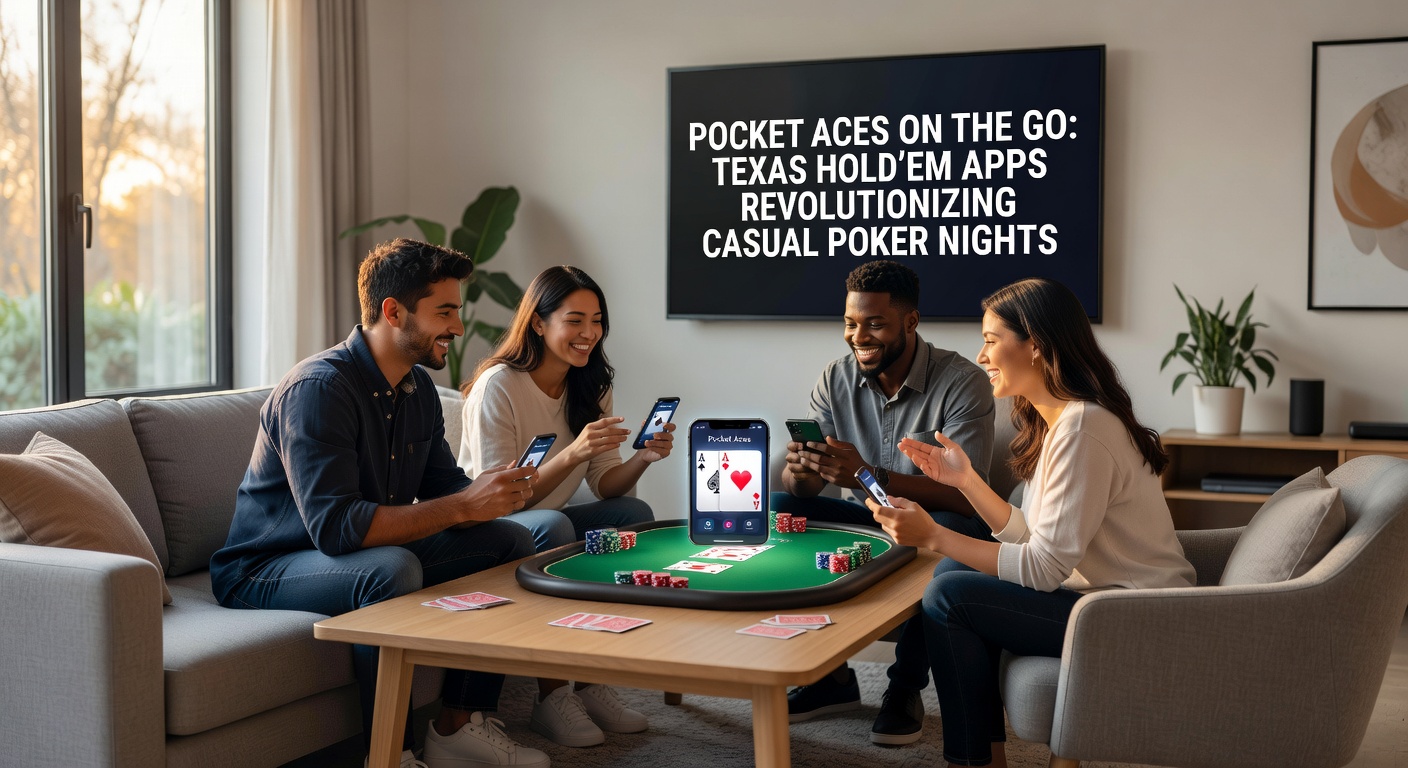
Texas Hold'em, long a staple of Friday night gatherings where friends shuffle chips around a felt-covered table, now thrives on smartphones and tablets, thanks to apps that pack full poker room action into pockets. Players fire up matches anytime, anywhere, ditching the need for physical decks or buy-ins; instead, they join virtual tables with global opponents, all while lounging on couches that once hosted those cash games. Data from app analytics firms reveals that downloads for top Hold'em apps surged 28% year-over-year through early 2026, with casual users—those playing for fun rather than stakes—driving most of the growth, since free-play modes mimic real tournaments without the risk.
What's interesting here lies in how these apps replicate the social buzz of poker nights; features like voice chat, custom avatars, and friend invites turn solo sessions into group events, even when buddies scatter across time zones. One observer notes that during a typical weekend in May 2026, peak hours saw millions logging in simultaneously for freeroll events, where entry costs nothing yet prizes roll in as virtual chips or bragging rights. Turns out, this digital pivot started gaining steam around 2020, when pandemic lockdowns pushed players online, but by 2026, seamless integrations with social media have made it the new normal for casual play.
Popular Apps Leading the Charge
Apps like WSOP.com, PokerStars Play Money, and GGPoker dominate the scene, each offering Texas Hold'em variants that cater to beginners and veterans alike; WSOP, for instance, boasts official World Series of Poker branding, drawing users with daily freerolls that echo Las Vegas spectacles right on mobile devices. PokerStars, a veteran in the space, reports over 50 million lifetime downloads, while its play-money tables host hyper-turbo sit-n-gos perfect for quick 10-minute rounds between errands.
GGPoker stands out too, with innovations like camera-facing snapshots that let players peek at opponents' reactions during bluffs, adding that live-table tension to casual nights; users often pair these with video calls for hybrid home games, blending app action with real-time banter. And then there's 888poker, whose social poker rooms emphasize club features, where groups create private leagues, tracking stats over weeks without ever leaving the app. Figures from Sensor Tower indicate these four apps alone accounted for 65% of Hold'em category installs in Q1 2026, a trend that held steady into May when seasonal promotions spiked engagement further.
But here's the thing: accessibility fuels the revolution; most apps run on iOS and Android without hefty specs, loading lobbies in seconds and supporting offline practice modes, so newcomers hone folds and raises before jumping into multiplayer chaos.
Key Features Redefining Casual Play
Modern Hold'em apps pack tools that go beyond basic dealing; multi-tabling lets skilled players juggle four games at once, squeezing hours of action into a single commute, while hand history reviews—complete with equity calculators—help dissect bad beats post-session. Social integrations shine brightest for casual nights, though; invite links via WhatsApp or Discord pull friends into teh same lobby instantly, and emote packs add flair, from fist pumps after rivered straights to sad trombones on busted flushes.
AI opponents fill gaps when human tables thin out, adapting to player styles with uncanny precision—research from Carnegie Mellon University on poker bots shows these virtual foes now beat 90% of recreational humans in simulated Hold'em, training users without waiting for seats. Tournaments run 24/7 too, from $0 buy-in satellites to massive fields of 10,000 runners, where one study by the American Gaming Association highlights how such events boosted average session times by 40% among casual demographics in 2026.
Customization keeps things fresh; themes range from neon Vegas to classic saloon vibes, and stake levels span micro to high-roller play money, ensuring everyone finds a fit. Yet, battery optimization and data-light modes make extended nights feasible, even on older devices, preventing the frustration of mid-hand crashes that plagued early apps.
Growth Stats and Market Momentum
Numbers paint a clear picture of the boom: global active users for top Hold'em apps hit 15 million monthly by April 2026, per App Annie data, with North America leading at 42% share; Europe follows close, buoyed by relaxed mobile gaming regs. Revenue from in-app purchases—like cosmetic upgrades or premium tables—topped $1.2 billion industry-wide last year, but casual players stick to free tiers, which still drive ad views and retention.
In May 2026 specifically, a cross-app freeroll series drew 2.3 million entrants over Memorial Day weekend, shattering prior records as organizers synced promotions across platforms; this event alone spiked daily active users 35%, according to internal app metrics shared publicly. Observers point to cross-promotions with streaming platforms too, where Twitch integrations let viewers join spectator modes, turning passive watches into interactive nights.
Demographics shift notably as well; women now comprise 38% of players, up from 22% five years ago, while Gen Z floods in via TikTok challenges that pit app showdowns against viral dances. That's where the rubber meets the road for casual poker—apps lower barriers, making Hold'em less about smoky basements and more about screen shares during barbecues.
Navigating Regulations Across Borders
Play-money Hold'em apps skirt real-money hurdles in many regions, operating legally as skill games rather than gambling; in the US, states like New Jersey and Pennsylvania greenlight social poker via apps, with the New Jersey Division of Gaming Enforcement reporting zero violations in free-play categories through Q2 2026. Canada mirrors this, as Ontario's iGaming framework from Alcohol and Gaming Commission of Ontario permits free apps province-wide, fostering growth without federal clashes.
Australia takes a stricter line yet allows social poker under interactive gambling bans, provided no real stakes enter play; EU nations vary, but Malta's framework via its gaming authority supports app-based freeroll ecosystems. These rules enable seamless casual nights, although developers geo-block real-money features in restricted areas, keeping the focus on fun. Experts who've tracked compliance note that transparent age gates and responsible gaming nudges—like session timers—have curbed misuse, with self-exclusion rates under 1% in audited apps.
Challenges and the Road Ahead
Not everything runs smoothly; connectivity lags in rural spots can tank all-ins, and algorithmic matchmaking sometimes pits sharks against fish, frustrating newbies who bail early. Security remains tight, though—end-to-end encryption thwarts cheats, as one case from 2025 revealed bots banned within hours via behavioral AI. Developers counter issues with cloud saves and low-data tournaments, ensuring reliability grows.
Looking forward, AR overlays promise to layer virtual tables onto real furniture, blending physical and digital nights; prototypes tested in 2026 betas already let friends "sit" around coffee tables via phones. Cross-platform play expands too, uniting console, PC, and mobile lobbies into mega-events. People who've studied trends predict 20% annual user growth through 2030, fueled by 5G speeds that eliminate lag entirely.
Conclusion
Pocket aces now travel everywhere, transforming Texas Hold'em from occasional home rituals into daily digital rituals that fit modern lives; apps deliver the game's essence—strategy, bluffing, camaraderie—without the logistics of old-school setups. As stats climb and features evolve, casual poker nights evolve right alongside, more inclusive and instant than ever. The ball's in players' courts now, with endless tables waiting at a tap.