Cross-Border Regulatory Obstacles Challenge Mobile Access to Global Poker Tournaments
Noah Jenkins · Aug 23, 2026
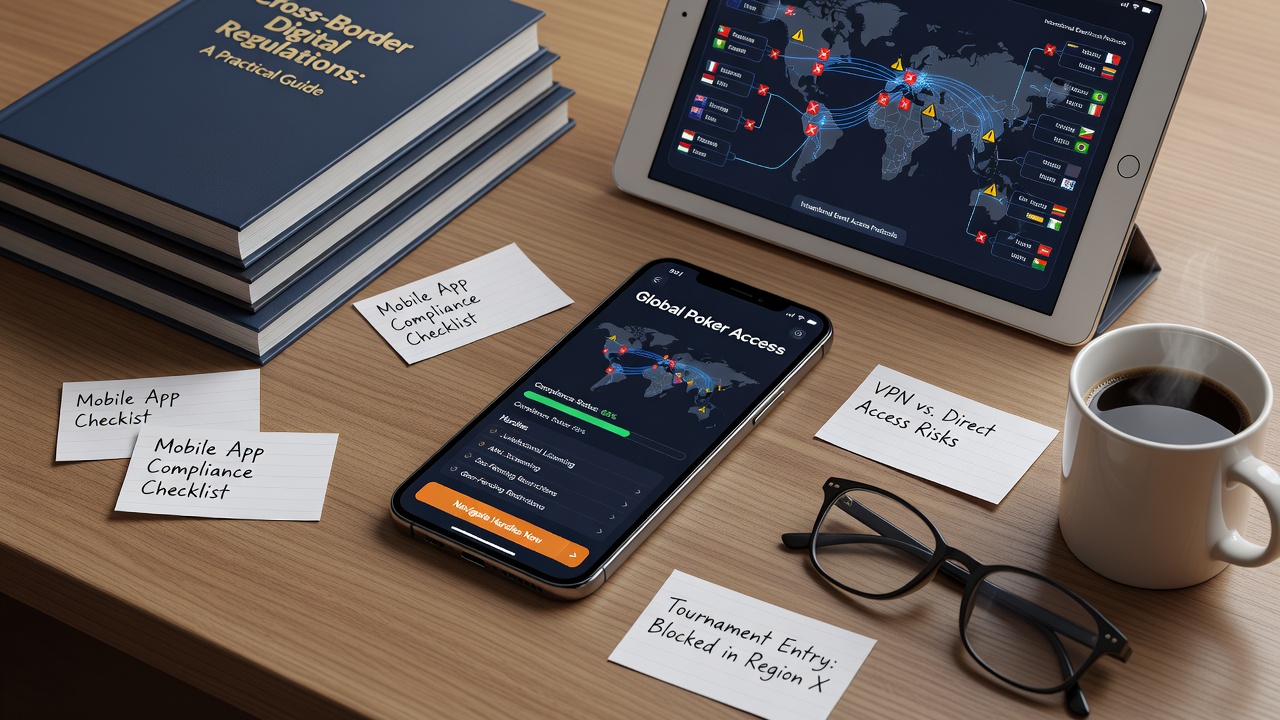
Cross-Border Regulatory Obstacles Challenge Mobile Access to Global Poker Tournaments
Players seeking entry into international poker tournaments through mobile applications encounter a patchwork of licensing requirements, data protection rules, and payment restrictions that vary sharply by jurisdiction. Regulatory bodies in different regions enforce distinct standards for age verification, geolocation tracking, and financial transaction reporting, which forces app developers to implement layered compliance systems that adapt in real time as users cross borders. Research from industry analysts indicates that these systems often rely on IP address mapping combined with device-level GPS checks to determine eligibility before any tournament registration proceeds.
Regional Licensing Variations Create Access Barriers
European Union member states maintain separate national frameworks under broader directives that address online gambling operators, whereas Canadian provinces such as Ontario and British Columbia operate their own licensing regimes that require explicit approval for mobile platforms offering real-money play. Observers note that Australian states impose additional point-of-consumption taxes and mandatory responsible gambling tools, which mobile apps must integrate before users from those areas can participate in cross-border events. Data shows that failure to align with these localized rules frequently results in tournament organizers blocking access from specific regions rather than risking enforcement actions.
Those who manage tournament platforms report that geofencing technology updates occur regularly, especially ahead of major events scheduled for August 2026 when several international circuits plan simultaneous mobile qualifiers. Compliance teams monitor regulatory bulletins from multiple governments to adjust server access lists accordingly, because a single mismatch in licensing can trigger account freezes for entire user segments.
Mobile-Specific Technical Requirements
Application developers integrate continuous location verification that combines satellite positioning with network triangulation, since static IP checks alone prove insufficient when users switch between cellular and Wi-Fi connections during a session. Studies on digital gambling platforms reveal that these multi-factor systems reduce unauthorized participation yet introduce latency that affects real-time tournament pacing. Payment processors must also route transactions through licensed gateways that comply with anti-money laundering protocols established by financial regulators in each participating country.

Privacy regulations add further layers, particularly where personal data collected for tournament registration must meet standards for cross-border transfer. Experts in data governance point out that encryption standards and consent mechanisms differ between North American and Asia-Pacific markets, prompting developers to maintain region-specific data storage architectures. One case involved a major operator that restructured its backend databases after new rules took effect in a key European market, illustrating how quickly technical requirements evolve.
Payment adn Transaction Compliance Issues
Financial institutions that facilitate entry fees and prize distributions apply their own screening criteria aligned with national laws, which creates additional hurdles when funds move between accounts in different currencies and regulatory zones. According to reports from the European Commission, harmonization efforts continue but national variations in tax reporting and source-of-funds verification persist. Mobile apps therefore embed dynamic payment routing that selects compliant processors based on the user's detected location at the moment of transaction.
Those managing international events in August 2026 anticipate heightened scrutiny on cryptocurrency options, as several jurisdictions have introduced new disclosure requirements for digital asset transfers used in gambling. Operators respond by maintaining separate ledgers and audit trails that satisfy demands from multiple oversight bodies simultaneously.
Enforcement Trends and Operator Responses
Regulatory agencies in North America and Europe have increased coordinated information sharing regarding unlicensed operators, which affects mobile tournament access when apps detect connections from restricted territories. Figures from industry associations show rising numbers of domain and app store removals tied to compliance shortfalls. Developers counter these pressures by embedding modular compliance engines that activate specific rule sets depending on detected user location, allowing a single application to serve diverse markets without uniform global permissions.
Research indicates that successful navigation depends on proactive monitoring of legislative calendars across jurisdictions, since sudden policy shifts can alter eligibility overnight. Tournament organizers therefore maintain dedicated legal teams that review proposed rule changes and adjust participant onboarding flows accordingly.
Conclusion
Mobile applications offering access to international poker tournaments must balance technical innovation with ongoing adherence to divergent regulatory demands across borders. Data from multiple oversight sources demonstrates that layered verification systems, adaptive payment routing, and continuous regulatory monitoring form the core strategies employed by compliant operators. As events approach in August 2026, these mechanisms continue to evolve in response to updated requirements from governments and financial regulators worldwide.