Biometric Verification Transforming Account Access Across Worldwide Digital Table Game Platforms
Xander Butler · Jun 28, 2026
Biometric Verification Transforming Account Access Across Worldwide Digital Table Game Platforms
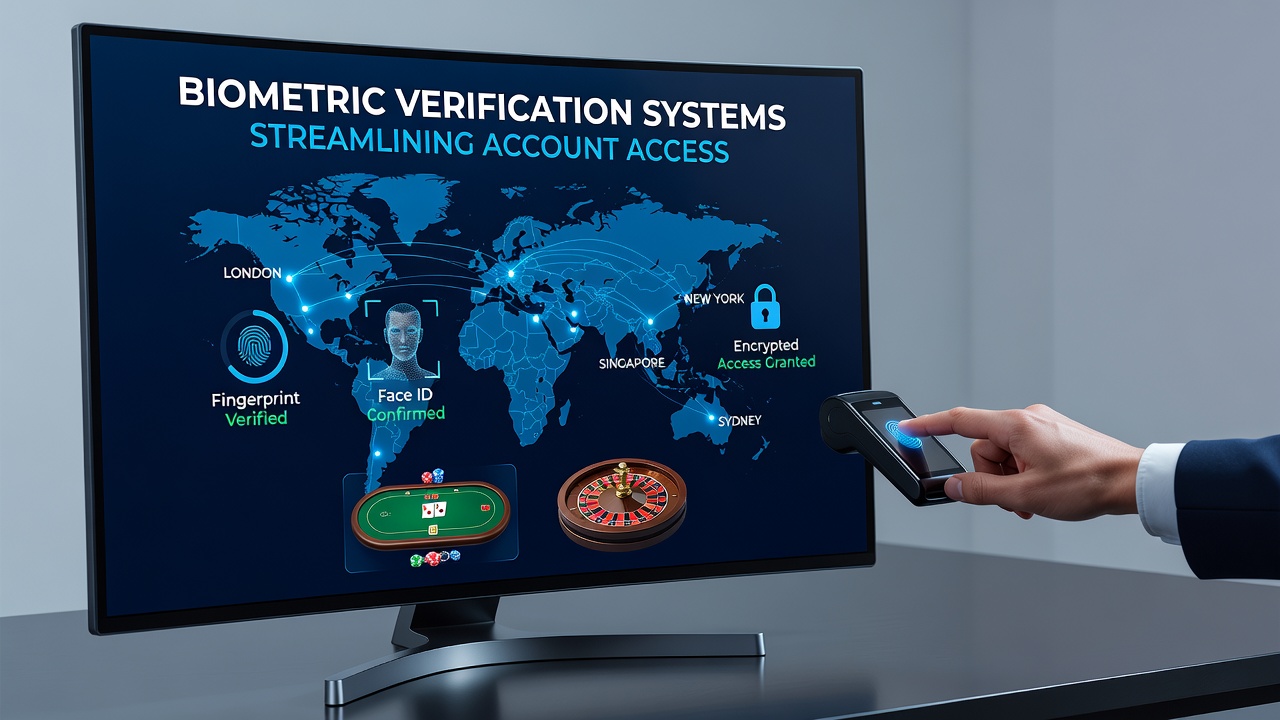
Platforms handling live dealer blackjack, roulette and poker have integrated biometric verification to replace traditional password entry with fingerprint scans, facial recognition and voice patterns. These systems confirm player identity in seconds while maintaining compliance with regional licensing requirements. Data from multiple markets shows reduced login friction leads to higher session completion rates for table game enthusiasts who switch between mobile and desktop interfaces. Operators report that biometric tools address common pain points such as forgotten credentials or multi-factor delays during peak evening hours. When a player opens an app in June 2026, the device camera or sensor captures unique traits, matches them against stored templates and grants immediate access to funded accounts. This process eliminates manual typing on small screens, which studies link to higher abandonment during live dealer sessions.Core Technologies Driving Faster Entry
Facial recognition leads adoption because most smartphones already include the necessary hardware, whereas fingerprint sensors require direct contact. Voice biometrics add another layer for users who prefer hands-free commands while seated at virtual poker tables. Algorithms compare live samples against encrypted templates stored on secure servers rather than transmitting raw data, which satisfies data protection standards in the European Union and Canada alike.
Researchers at academic institutions have measured matching accuracy rates above 99 percent under controlled lighting conditions, with fallback options like PIN entry available when environmental factors interfere. Platforms combine these methods with device binding so that verification remains tied to both the individual and the hardware in use.
Regional Adoption Patterns Observed by Mid-2026
North American operators expanded biometric options after several states updated remote gaming rules in 2025, allowing facial scans to substitute for repeated identity checks during table game play. European platforms followed similar paths under existing digital services regulations that emphasize secure authentication without unnecessary data collection. Australian and Asian markets show parallel growth, driven by large mobile user bases that favor quick logins before joining live baccarat tables.

According to industry reports from the European Gaming and Betting Association, biometric logins now account for over 40 percent of new account activations in regulated markets. A separate analysis released by the Canadian Gaming Association highlights reduced support tickets related to password resets, freeing staff to focus on game integrity monitoring instead.
Security Enhancements Alongside Convenience Gains
Biometric templates undergo one-way encryption so that even if a database faces compromise, the original traits cannot be reconstructed. Continuous liveness detection prevents static image or recording attacks during high-stakes table game sessions. These measures align with standards set by gaming laboratories that test platforms before licensing approval.
Multi-modal systems that require both face and fingerprint checks add further protection when accounts show unusual activity patterns, such as rapid location changes across time zones. Observers note that such layered verification maintains player trust while satisfying audit requirements from regulators in multiple jurisdictions.
Impact on Player Behavior and Platform Metrics
Analytics from major operators indicate shorter intervals between app launch and first bet placement once biometrics replace older methods. Table game sections, which often involve real-time dealer interaction, benefit particularly because players remain engaged without interruption from authentication steps. Retention figures collected through June 2026 reveal modest but consistent improvements in repeat login frequency among users who enable these features.
One study conducted by university researchers tracked thousands of accounts over six months and found that biometric-enabled players completed more hands per session on average, attributing the difference to seamless re-entry after brief pauses. Platforms continue refining algorithms to handle diverse skin tones, ages and device types, broadening accessibility across global audiences.
Future Developments in Verification Standards
Industry groups collaborate with hardware manufacturers to standardize biometric data formats, which could simplify cross-border account portability while preserving local regulatory oversight. Emerging techniques such as palm vein scanning or behavioral biometrics that analyze typing rhythms during poker decisions may appear in future updates.
Regulators in several regions review these advancements through ongoing consultations, balancing innovation speed against consumer protection priorities. Platforms that demonstrate robust testing and transparent consent processes receive faster approvals for new verification features.
Conclusion
Biometric verification has become a standard component of account access on global digital table game platforms by June 2026, delivering measurable reductions in login time and support overhead. Continued refinement of matching algorithms alongside regulatory alignment supports wider deployment while upholding security benchmarks. Operators and players alike encounter a streamlined experience that keeps focus on the games themselves rather than repeated credential entry.